
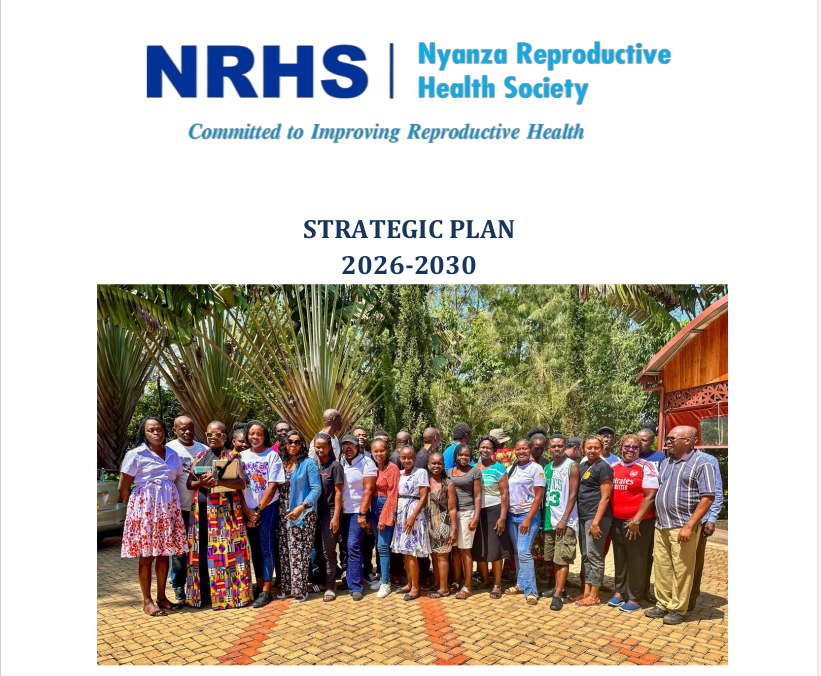
Link to NRHS 2026-2030 Strategic Plans: https://nrhskenya.org/pics/2026_2030_strategic_plan
A Vision Rooted in Community Empowerment
At the heart of the strategic plan is a simple but powerful vision:
A world where vulnerable individuals and communities are empowered to define and achieve their own needs and goals.
Our mission over the next five years will focus on improving public health through:
- Research
- Capacity building
- Education
- Evidence-based programming
- Policy advocacy
We have released its 2026–2030 Strategic Plan, outlining the organization’s vision for advancing public health, strengthening communities, and expanding evidence-based healthcare programs across Kenya. Through the strategy, NRHS reflects on its achievements over the past five years while setting priorities for the future in reproductive health, HIV prevention, STI care, mental health, research, and community empowerment.
Founded in 2002, NRHS has continued to position itself as a research-driven public health organization working with vulnerable and underserved populations. The organization states that its mission remains focused on improving public health through research, evidence-based programming, capacity building, education, and advocacy.
According to the strategic plan, NRHS has made major contributions to HIV prevention programs, including Voluntary Medical Male Circumcision (VMMC) and Early Infant Male Circumcision (EIMC). The organization reports supporting national guidelines, training healthcare providers, and delivering services to thousands of clients between 2021 and 2025. NRHS notes that despite funding challenges, it has continued sustaining some of these services through institutional commitment and community trust.
NRHS also highlights its work in STI prevention, treatment, and research. The organization reports treating over 1,000 STI clients during the previous strategic period while conducting studies that contributed to scientific publications and informed public health policy in Kenya. Community education and sensitization efforts also reached thousands of individuals through outreach programs and public health initiatives.
A significant part of the strategic plan focuses on services for marginalized and high-risk populations, including sexual and gender minority communities. NRHS states that it has provided peer education, psychosocial support, counselling, safe spaces, HIV prevention services, condom and lubricant distribution, PrEP access, and group therapy programs aimed at improving physical, mental, and social well-being. The organization reports that more than 15,000 individuals participated in safe-space activities during the past five years.
The strategic plan also acknowledges major challenges affecting healthcare delivery and civil society organizations in Kenya. NRHS identifies donor funding reductions, shortages of prevention commodities, staffing constraints, infrastructure limitations, and inconsistent access to underserved communities as ongoing barriers to sustainable healthcare delivery.
Looking ahead, NRHS says the 2026–2030 strategy expands beyond traditional reproductive health programming into broader areas including mental health, economic empowerment, organizational strengthening, technology integration, professional development, and financial sustainability. The organization emphasizes that health outcomes are deeply connected to social, economic, and institutional conditions.
Geographically, NRHS reports that its work has primarily focused on counties in western Kenya, including Kisumu, Homa Bay, Siaya, Busia, Kakamega, Kisii, and Migori, while remaining open to expansion into other regions where public health needs exist.
Overall, NRHS presents the 2026–2030 Strategic Plan as a roadmap for building healthier, more resilient, and more inclusive communities through research, partnerships, advocacy, and evidence-based healthcare interventions.