Risk Evaluation and Cervical Health (REACH) Study
High-risk HPV among female sex workers and their primary male partners
Administered by NRHS at the UNIM Research and Training Centre, Lumumba Sub-County Hospital, Kisumu, Kenya
Overview and Purpose
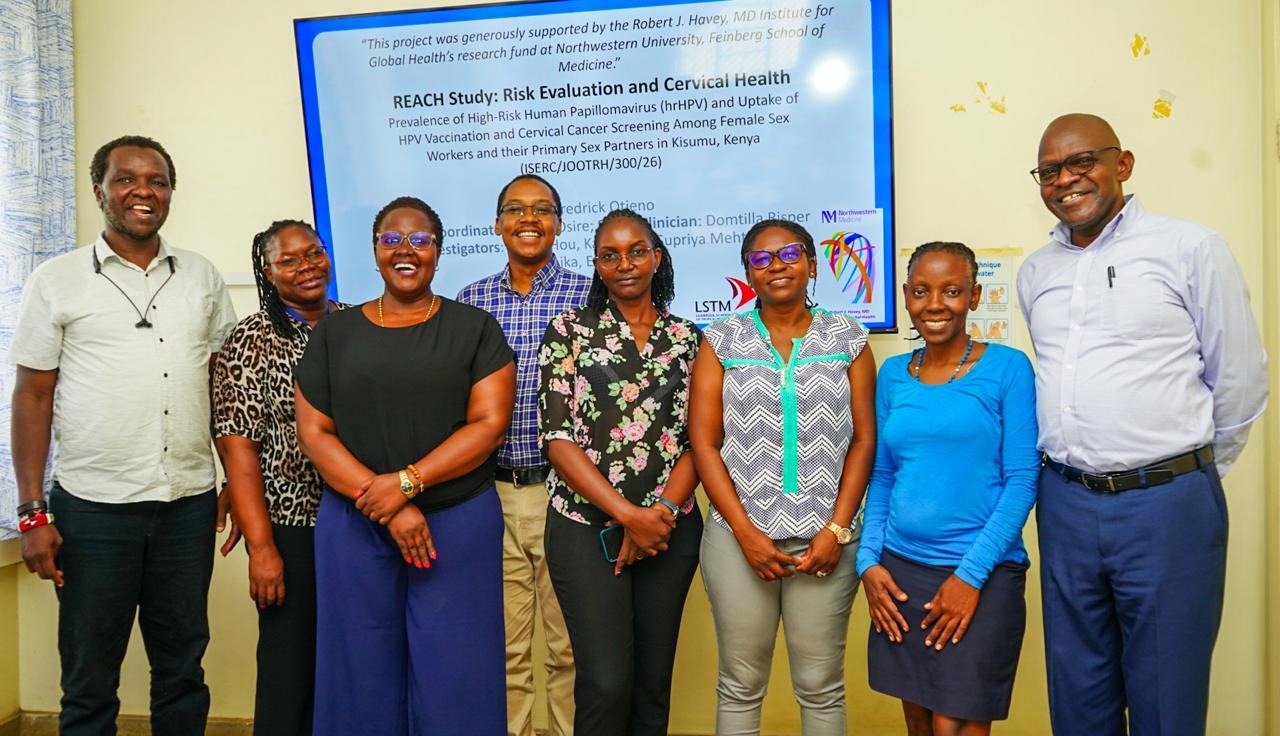
The Risk Evaluation and Cervical Health (REACH) Study is a research initiative designed to close critical gaps in human papillomavirus (HPV) burden and prevention services in Kisumu, Kenya. Guided by three core pillars: Prevention, Screening, and Linkage to Care, the study seeks to measure the burden of high-risk HPV (hrHPV), improve prevention access, and connect participants directly to clinical care.
At a glance, the REACH Study aims to:
- Measure hrHPV prevalence among female sex workers (FSWs) and their primary male partners.
- Offer prevention through HPV vaccination to eligible hrHPV-negative participants.
- Link to screening by connecting hrHPV-positive women to cervical cancer screening and follow-up care.
Background and Rationale
Why HPV and Cervical Cancer Matter
Most sexually active individuals acquire HPV at some point in their lives, and persistent infection with high-risk genotypes is central to the development of cervical cancer. At least 14 HPV genotypes are classified as high-risk, with HPV-16 and HPV-18 contributing to approximately 70% of cervical cancer cases worldwide. Vaccination (primary prevention) and screening (secondary prevention) remain the most effective strategies for preventing cervical cancer.
Globally, low- and middle-income countries bear a disproportionate burden, accounting for roughly 90% of cervical cancer deaths. In Kenya, the estimated incidence of cervical cancer exceeds 30 cases per 100,000 women, driven by late diagnosis, limited access to screening, inequities in healthcare delivery, and sociocultural barriers.
Focus on Female Sex Workers and Knowledge Gaps
Female sex workers experience intersecting vulnerabilities that elevate their risk and complicate access to HPV prevention and care, including:
- Sexual exposure: Higher numbers of sexual partners and inconsistent condom use.
- Structural barriers: Stigma, criminalization, and unequal access to healthcare services.
- Economic pressures: Financial vulnerability and competing daily priorities.
- Co-occurring risks: Alcohol or substance use and HIV co-infection.
Despite these risks, major knowledge gaps persist in Kisumu:
- The local burden of hrHPV among FSWs is insufficiently characterized.
- Limited data exist on hrHPV prevalence among the primary male partners of women at elevated risk.
- Adult FSWs are not routinely reached by Kenya's national HPV vaccination program.
- The real-world feasibility and uptake of HPV vaccination among hrHPV-negative adults and cervical screening among hrHPV-positive women require formal evaluation.
Study Objectives
- Primary Objective: Determine the prevalence of high-risk HPV (hrHPV) among female sex workers and their primary male sex partners in Kisumu, Kenya.
- Secondary Objectives:
- Assess HPV vaccination uptake among eligible hrHPV-negative participants.
- Assess cervical cancer screening uptake among hrHPV-positive women.
- Identify sociodemographic, behavioral, and clinical factors associated with hrHPV infection and prevention service uptake.
Study Design, Setting and Population
Design and Clinical Setting
REACH utilizes a cross-sectional assessment combined with structured prevention and clinical care pathways following HPV test results. All study activities take place at the UNIM Research and Training Centre at Lumumba Sub-County Hospital in Kisumu, administered by NRHS.
- Women: Undergo a single-time-point hrHPV assessment. Eligible, unvaccinated women who test hrHPV-negative are invited to return for HPV vaccination at a second visit, while women who test hrHPV-positive are referred for cervical cancer screening.
- Men: Primary male partners participate in a cross-sectional study visit consisting of a behavioral/health survey and hrHPV testing.
Target Population and Sample Size
- Women: Recruited primarily from participants previously enrolled in the POWWeR Health Study (given priority), alongside other FSWs recruited from local hotspots. From the POWWeR Health recruitment pool (407 enrolled; 372 remained on protocol; 347 agreed to future contact), the protocol estimates 295 consenting women, providing 80%+ statistical power and 95% precision across an expected hrHPV prevalence of 30-50%.
- Male Partners: Primary male sex partners (including husbands, boyfriends, paying, or non-paying partners) invited by enrolled female participants.
Eligibility Criteria
| Group | Inclusion Criteria | Exclusion Criteria |
|---|---|---|
| Women | Prior POWWeR Health enrolment or other FSWs; agreement to future contact / willingness to enroll; reside or work in Kisumu County; provide informed consent | Prior cervical cancer diagnosis; history of total hysterectomy; unwilling or unable to provide consent |
| Men | Aged 18 years or older; primary male partner of an enrolled female participant; reside or work in Kisumu County; provide informed consent | Unwilling or unable to provide consent |
Recruitment, Study Procedures and Laboratory Testing
Recruitment and Enrollment
Participant choice and privacy guide every stage of recruitment:
- Contact: Study staff invite eligible POWWeR Health participants who previously consented to future contact.
- Information: Staff provide a comprehensive study overview, and interested individuals schedule a screening visit.
- Eligibility Screening: Potential participants are screened against inclusion/exclusion criteria at the UNIM clinic.
- Informed Consent: Written informed consent is obtained in private in the participant's preferred language, followed by same-day or next-day enrollment.
Enrolled women have full autonomy over whether to invite a primary male partner. Male partners may contact the Study Coordinator independently using a referral card.
Clinic Visit Procedures
Both female and male participants complete five core procedures at the UNIM clinic:
- Interviewer-administered questionnaire (tablet-based)
- Clinician medical history
- Clinical examination
- HPV specimen collection
- HIV counselling and testing
HPV Testing and Genotyping
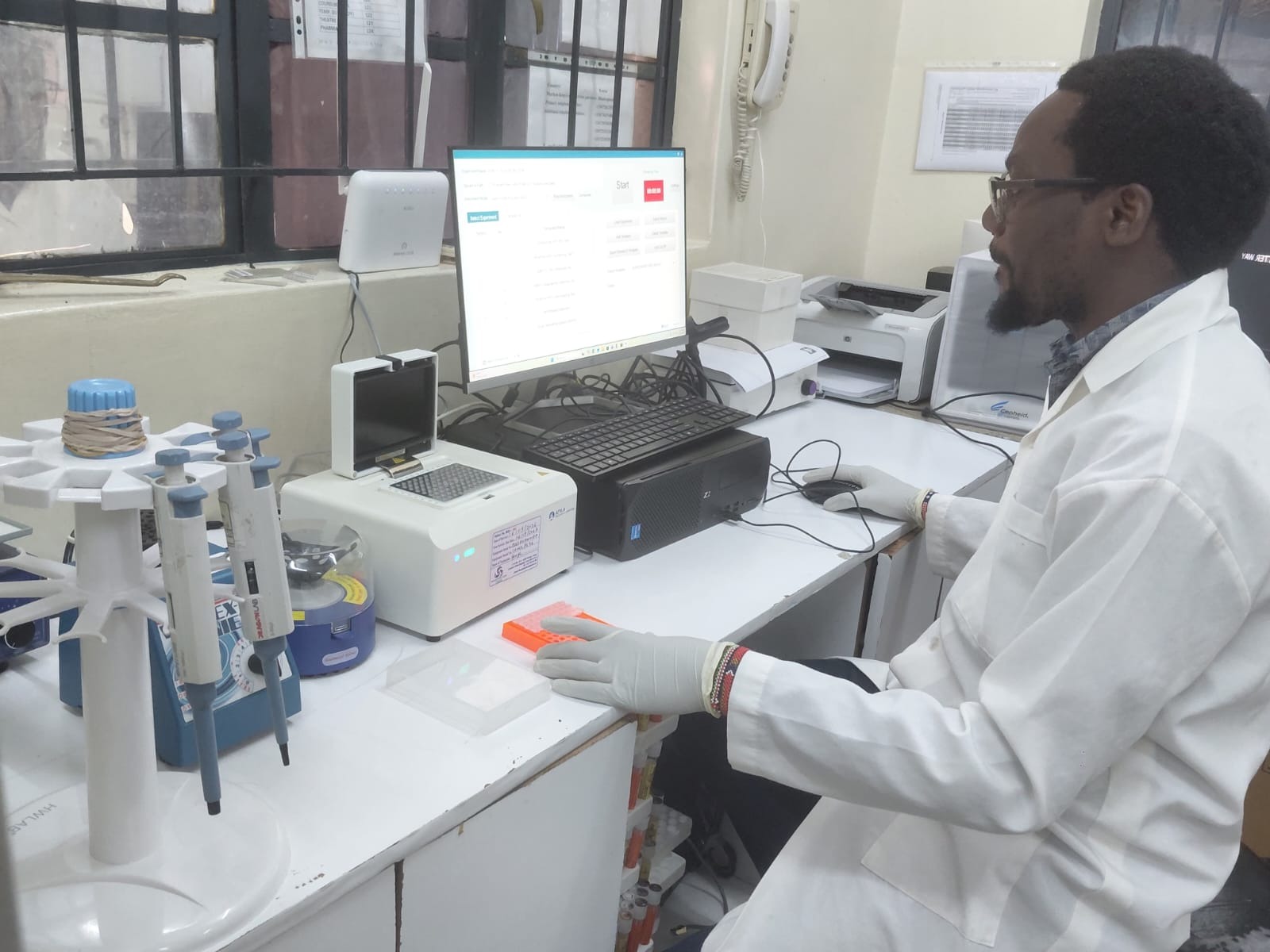
Samples are analyzed using the Atila Biosystems AmpFire assay, a high-throughput, isothermal nucleic acid amplification test that detects and genotypes hrHPV. Test results are categorized as:
- hrHPV-negative
- hrHPV-positive, stratified into specific genotype groups: HPV-16; HPV-18/45; HPV-31/33/35/52/58; and HPV-39/51/56/59/68
All results are communicated confidentially accompanied by individualized post-test counselling.
Clinical Care, Screening and Prevention Pathways
Result-Based HPV Pathways
- hrHPV-Negative Participants: Receive targeted HPV prevention education; eligible and unvaccinated individuals are offered free HPV vaccination.
- hrHPV-Positive Women: Referred directly for cervical cancer screening using Visual Inspection with Acetic Acid (VIA) at UNIM, or Pap smear / HPV-based triage at Lumumba Sub-County Hospital depending on service availability.
Cervical Screening and Management Protocol
Follow-up care is guided by hrHPV status, HIV status, and Kenyan national clinical guidelines:
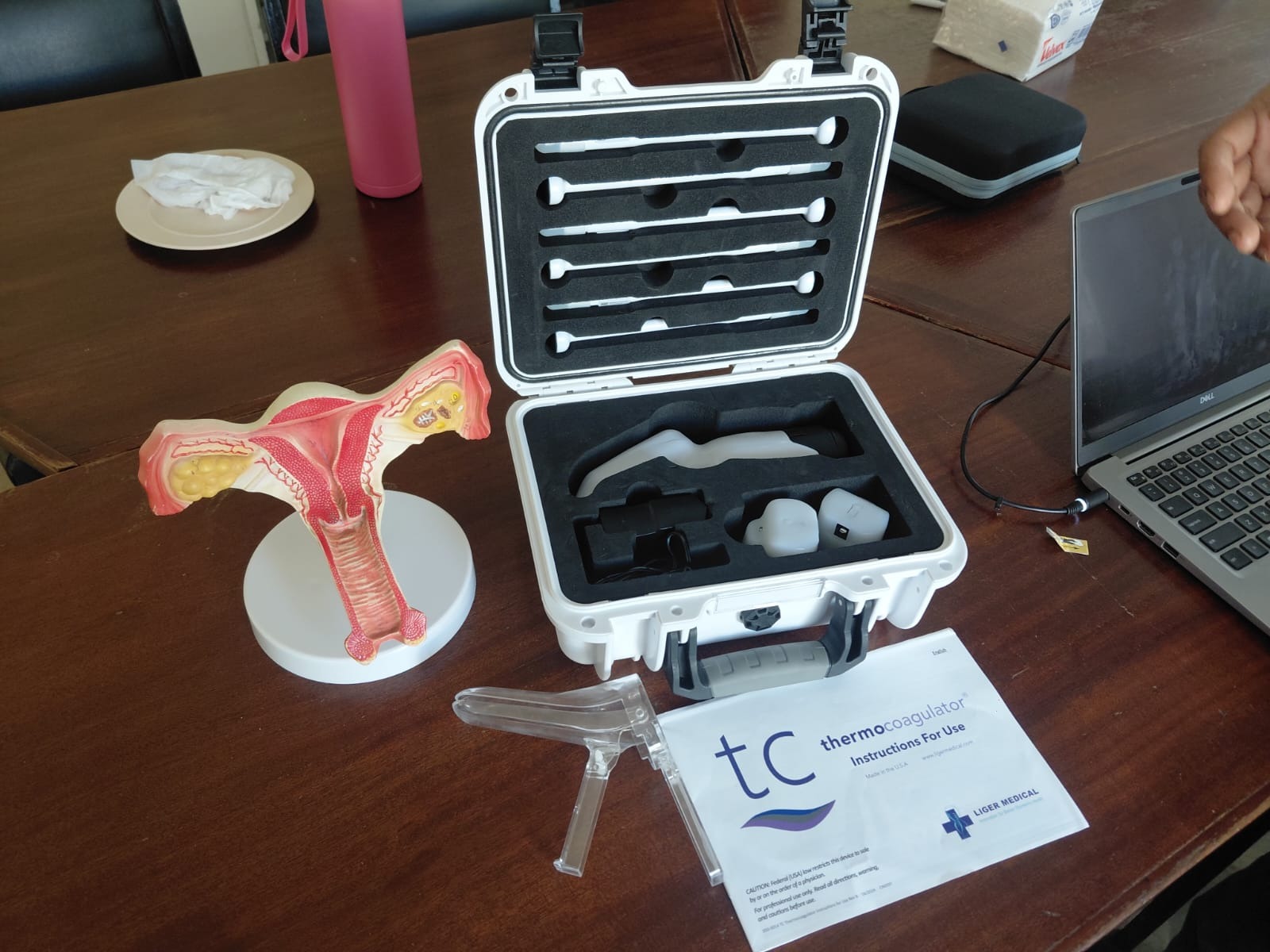
- HIV-Positive Women: The study protocol provides for immediate management for both VIA-positive and VIA-negative hrHPV-positive women, including access to the thermal ablation treatment pathway.
- HIV-Negative Women: Those who are VIA-positive with suspected precancerous lesions are referred for thermal ablation, while those who are VIA-negative are referred for routine re-screening.
Integrated HIV and STI Services
- HIV Testing and Linkage: Confidential HIV counselling and testing is conducted per Kenya Ministry of Health guidelines using the serial testing protocol. Participants testing HIV-positive receive counsellor-supported transition, referral, and follow-up for comprehensive HIV care.
- STI Care: Syndromic treatment for sexually transmitted infections (STIs) is provided on-site in accordance with Kenyan clinical guidelines, with complicated cases referred to the hospital.
Data Collection and Analytic Plan
Data Collection Domains
Data are captured via a tablet-based interviewer-administered questionnaire alongside clinical records across four domains:
- Demographic and Socioeconomic: Age, marital status, education, employment, income, household resources, and financial and food security.
- Sexual and Reproductive Health: Sexual partners, transactional sex, condom use, work venues, cervical screening and HPV vaccination history, and HPV knowledge and attitudes.
- Other Behaviors: Alcohol, drug, and cigarette use, healthcare access, and intravaginal washing practices.
- Wellbeing and Menstrual Health: Depressive symptoms, WHO-5 Well-Being Index, and menstrual history and management.
Outcomes, Predictors and Statistical Analysis
Analyses are conducted separately for women and men:
- Primary Outcome: hrHPV status (positive vs. negative).
- Secondary Outcomes: HPV vaccine uptake among eligible hrHPV-negative participants; cervical cancer screening uptake among hrHPV-positive women.
- Potential Predictors: Sociodemographic factors (age, education, economic indicators, marital status), behavioral factors (partners, condom use, substance use), and clinical factors (HIV status, STI history, prior vaginal microbiome characteristics, vaccination history).
- Statistical Methods: Descriptive prevalence estimates with 95% confidence intervals, bivariate chi-square tests, regression analyses for selected covariates, Akaike Information Criterion (AIC)-guided multivariable models, and potential dyadic probit analysis for partner pairs.
Ethics, Participant Safety, Risks and Benefits
Ethical Oversight and Confidentiality
- Approvals: Ethical oversight is provided by the Jaramogi Oginga Odinga Teaching and Referral Hospital Institutional Scientific and Ethics Review Committee (JOOTRH ISERC), with additional approvals from collaborating institutions for de-identified data analysis.
- Voluntary Consent and Compensation: Informed consent is offered privately in English, Kiswahili, or DhoLuo. Participation is entirely voluntary; participants may refuse, withdraw, or decline any study procedure at any time without penalty. Participants receive KES 500 as reimbursement for transport and time, in line with ethical guidance.
- Privacy and Training: Confidentiality is safeguarded using unique study ID codes, separate storage of locator information, password-protected/encrypted electronic data, locked physical records, and private specimen collection rooms. All staff are trained in Good Clinical Practice (GCP), human participants protection, informed consent, and counselling.
Potential Risks and Anticipated Benefits
- Potential Risks: Mild discomfort from swab collection; emotional distress or embarrassment from sensitive interview questions or positive test results; minor discomfort, bruising, or rare infection from finger-prick blood draws; and potential risks related to confidentiality breach, stigma, or discrimination.
- Anticipated Benefits: Free hrHPV and HIV testing with professional counselling; on-site syndromic STI treatment; direct linkage to cervical cancer screening for hrHPV-positive women; free HPV vaccination for eligible hrHPV-negative women; and contributing vital local evidence to strengthen cervical cancer prevention services.
Study Limitations and Expected Impact
Methodological Limitations
Findings from the REACH Study are interpreted within the context of several methodological considerations:
- The cross-sectional design cannot establish temporality or causal relationships.
- Recruiting primarily from prior POWWeR Health participants may limit generalizability to FSWs outside research or outreach networks, and prior study participation may influence HPV awareness and service uptake.
- Self-reported behavioral data may be subject to recall and social desirability bias.
- Diagnostic or service-uptake classification may introduce misclassification, and screening or vaccination uptake may be underestimated if participants access services after the study window.
- Residual confounding and smaller subgroup sample sizes may affect statistical precision.
Contribution and Dissemination
The REACH Study generates actionable local evidence on hrHPV prevalence, associated risk factors, and real-world uptake of HPV vaccination and cervical screening among FSWs and their primary male partners in Kisumu. Findings will be shared through:
- Peer-reviewed scientific manuscripts
- Local stakeholder and community feedback meetings
- Direct engagement with the Kenya Ministry of Health, Community Advisory Boards (CAB), and local communities
- National and international scientific conferences